The US decision to withdraw troops from its European establishment, coupled to a decision this week to halt the deployment of an armoured brigade to Poland may have repercussions beyond the president’s intent.
In a move amid the panoply of gesture politics that characterizes the current US administration and following swiftly on the heels of an open spat between President Trump and Chancellor Friedrich Merz over the war with Iran, the reductions in strength visibly weaken US combat power in Europe and – more significantly, with additional cuts threatened by Trump – presage that power falling to dangerously low levels. Since Nature abhors a vacuum, the real danger is that Putin – and others, potentially – may seek to take advantage of that perceived weakness. That is the conundrum facing NATO planners, commanders and heads of state right now. What seems to some to be American whimsy and caprice may have long-term effects far beyond the intent of punishing Europe for having insufficient respect for Trump’s strategies of aggrandisement.
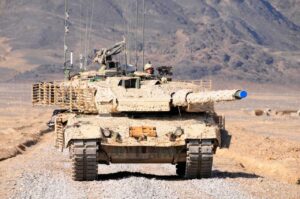
On 13 May the US Department of War abruptly canceled the scheduled rotation of an Armored Brigade Combat Team (ABCT – a formation of roughly 4,000 troops), intended to replace a similar formation in Poland for a nine-month mission, helping to deter Russian aggression of NATO’s vulnerable eastern flank. Two weeks earlier, the US administration announced the withdrawal of approx. 5,000 troops from Germany in the next 6-12 months. Also canceled was the deployment of a long-range fires battalion, leaving US forces in Europe without organic long-range fires capabilities.
Since Putin’s invasion of Ukraine in early 2022, the US has maintained at least four BCTs in Europe. A US decision to end rotational deployment to Romania last year reduced that number to three; if the planned withdrawal from Germany hits the 2nd Cavalry Regiment BCT, that further decreases to two. Should rotational deployments to Poland cease, the US would field a single BCT in Europe – one with reduced capabilities. These units have been the bedrock of the US contribution to deterring Russian aggression in Europe. Setting aside arguments whether or not Trump’s initiatives are actually bargaining chips in his attempts to bolster European self-defence, in imagining his self-vaunted business acumen of “closing the deal” will magically alter the overall picture, the removal of these significant assets – peremptorily and in an acrimonious atmosphere – arguably does greater damage to the alliance than any number of Russian battalions massing along frontiers.
The 2026 National Defense Authorization Act sets the minimum level of US troops in Europe at 76,000. Someone, somewhere, has calculated that as the required level of commitment to contribute to deterring Russia. Congress should keep an eye on this and, if necessary, bolster the legislation to ensure that carefully calculated strategic constructs do not suffer as a result of presidential whimsy. America’s armed forces deserve that consideration, at the very last!
Tim Mahon
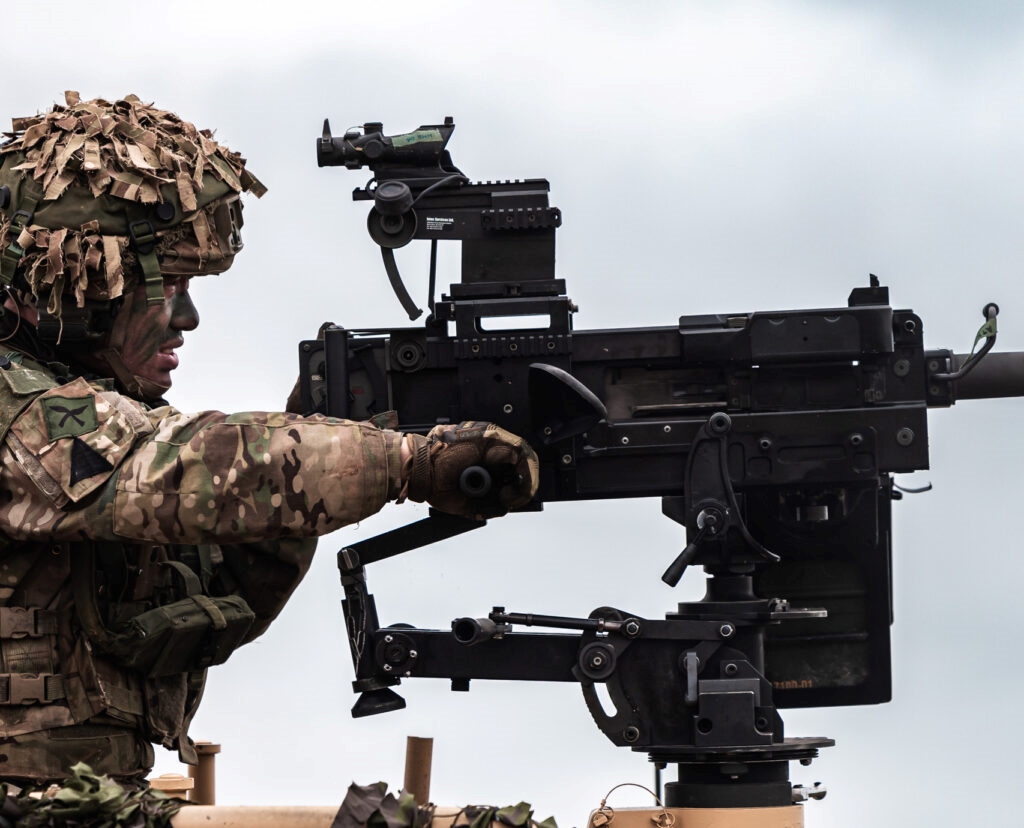
Headline image shows soldiers of Poland’s 6th Airborne Brigade while training with their US Army counterparts. (US Army)