Phil Hicks
For years, the drone sector has lived with a convenient distinction. Commercial operators inspected power lines, surveyed construction sites and monitored environmental assets, while defence organisations procured systems for intelligence, surveillance and force protection. Today, that dividing line is becoming increasingly difficult to see.
DroneX 2026, taking place in London next week, offers a timely snapshot of a broader transformation underway across the autonomy sector. What was once largely viewed as a collection of commercial technologies is increasingly becoming a strategic capability ecosystem in which civilian, security and defence applications share the same platforms, software, sensors and communications networks.
The exhibition’s four principal themes – Military & Defence, Commercial Operations, Emergency Services and Future of Flight – might once have represented distinct markets. Increasingly, however, they describe different users of many of the same technologies.
The sensors enabling infrastructure inspections can support military reconnaissance. The communications networks developed for commercial drone operations can underpin resilient autonomous systems. Artificial intelligence used to automate asset monitoring can also enhance situational awareness in contested environments. The same autonomy software, power systems and data architectures frequently serve multiple missions.
This convergence is hardly unique to drones. Throughout history, technologies have migrated between civilian and military use. What is different today is the speed. Advances in artificial intelligence, software-defined systems, edge computing and autonomous platforms are shortening the distance between commercial innovation and defence adoption.
Ukraine has accelerated this trend dramatically. The conflict has demonstrated that innovation cycles measured in years are increasingly being replaced by cycles measured in months. Many of the capabilities shaping modern defence are no longer emerging exclusively from traditional defence primes. They are being adapted from commercial technologies developed for entirely different markets.
The scale of that transformation is reflected in production volumes. Over the past 12 months, manufacturers around the world have significantly expanded output of low-cost uncrewed systems, particularly ‘first person view’ (FPV) drones. Once associated primarily with hobbyists and aerial filming, FPVs have become one of the defining technologies of contemporary conflict, demonstrating how rapidly commercial innovation can be adapted for military effect.
For governments seeking greater resilience and sovereign capability, this presents both opportunities and challenges. Dual-use innovation allows defence organisations to benefit from investment and innovation taking place across commercial markets. At the same time, it raises difficult questions about supply chains, industrial capacity, export controls and technological dependence.
Those questions are becoming increasingly visible across the global drone industry. Companies such as DJI continue to navigate a more complex geopolitical environment, balancing strong international commercial demand against growing restrictions, security concerns and efforts by Western governments to reduce reliance on foreign drone supply chains. The result is a growing debate not only about technology, but also about sovereignty.
In many respects, this reflects the reverse of initiatives such as Ploughshare, which sought to transfer defence innovations into commercial markets. Today, policymakers are increasingly focused on the opposite challenge: identifying commercially successful technologies and rapidly adapting them into defence and national security capabilities.
That shift helps explain why events such as DroneX are attracting growing attention from defence stakeholders. The issue is no longer whether autonomous systems work. The questions increasingly centre on who controls the technology, who owns the supply chains and how quickly commercial innovation can be translated into operational capability.
DroneX is therefore about far more than drones. It provides a window into the future of defence innovation itself. As governments seek greater sovereign capability while industry pursues global markets, the boundaries between civilian technology and national security are becoming increasingly blurred.
The autonomy revolution is becoming a dual-use revolution. That may be the most important story emerging from DroneX 2026. The event takes place at ExCel, London 29-30 September. https://dronexpo.co.uk/
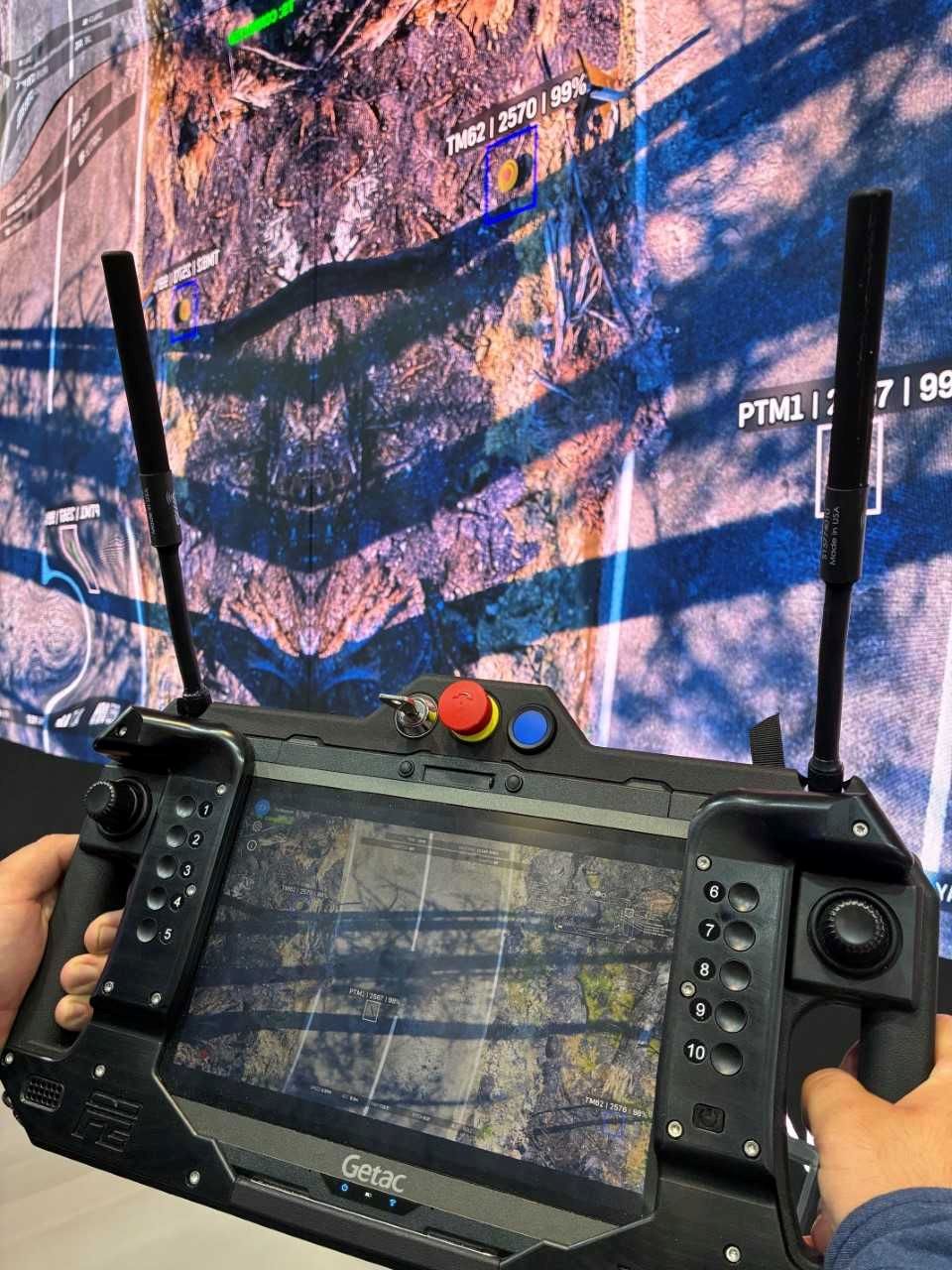
Main image shows a Ukrainian stand from last year – with military interest expected to peak at DroneX 2026. (courtesy DroneX 2026)
Philip Hicks is a strategic communications architect and founder of Pravo Consulting and the PravoZulu Substack advising boards on disruptive technology, global risk, and SaaS roll‑outs, from sectors spanning energy to defence. He is slated to become a regular contributor to Defence alternatives]