Philip Butterworth-Hayes
The effectiveness of using 5G to connect disparate land and air weapon systems was demonstrated on 30 October during a field-day NATO exercise at a military base just outside Riga, Latvia. This formed part of the organization’s Digital Backbone Experiment 2026 (DiBaX 2026) programme trialling 5G and AI communication networks. Areas covered included sensor and effector testing under the Layered Counter UAS Initiative (LCI-X), sharing data on artillery, armoured vehicle and fast-jet weapon effectiveness and deep-strike capabilities under the Next Generation Targeting (NGT) programme.
At DiBaX 2026, NATO allies and 100 defence industry companies from over 20 countries met at the Ādaži Military Base outside Riga to test digital infrastructure alongside previously unconnected defence technologies to ensure their effective and coordinated operation in NATO missions. Tanks, artillery and fighter aircraft demonstrated coordinated engagements, with targeting and system performance shared in a single platform. This year, the programme was expanded to focus on integration of sensors and effectors, with particular emphasis on the sensor capabilities required to detect, identify and respond to emerging threats, such as drones.
The DiBaX programme has been developed to accelerate the development of emerging technologies from technical readiness level four (TRL 4 – component and/or breadboard validation in a laboratory environment) to TRL 8 (actual system completed and qualified through test and demonstration). As a NATO commanders at the event said: “In the past it would take months and even perhaps years to evolve this kind of technology to maturity but in central and eastern Europe we are having to accelerate these technologies at speeds never seen before.”
The trial included jamming a swarm of adversarial drones which appeared suddenly over the battlefield, as well as linking a drone detection system to an air defence gun battery. A further demonstration showed how AI-based detection systems could not only neutralise the hostile drone but also launch a targeted strike on its launch position.
“None of the NATO nations currently has the capability to use mobile network mobile infrastructure with off-the-shelf components to detect flying objects,” observed Salvis Skladovs, Director of LMT Defence, one of the lead sponsors of DiBaX 2026. “It’s not a new concept, but the discussion is about who will deploy it first and we are working with Thales Italia on the joint development of 5G and 6G drone detection capability […] We need to do this as soon as possible. The main benefit is that this will be commercial off-the-shelf infrastructure and we will be able to closely integrate it with the command-and-control system – with this technology it’s not just about the quality of the data it’s the quality of the data for decision-making.”
Just after the demonstration, partners from the FutureG Office within the Office of the Under Secretary of War for Research and Engineering (US Department of War), and NestAI, a European AI lab for defence, joined Latvian officials at a ceremony at the Cabinet of Ministers to launch AlliedTechLabs, a public-private initiative creating a new international technology development and validation centre for defence and dual-use technologies in Latvia, focusing on three areas: drone communications, space data transmissions and integrated sensing and communications.
Also at the event European Commissioner for Economy and Productivity, Implementation and Simplification, Valdis Dombrovskis, announced that Latvia and the Netherlands would be the location of the first European drone technology hubs, to develop, test and evaluate new land, maritime and air drone and counter-drone military concepts and technologies. The first will be in Latvia, at the Selonia military training area, which also hosts one of NATO’s innovation ranges for drones and counter-drone technologies. It will focus on land and air drone and counter-drone technologies. The second, in Scheveningen in the Netherlands, will focus on naval capabilities, seabed security and the protection of harbours and critical underwater infrastructure.
“In developing drones and counter-drone systems, Europe has one significant advantage: our partnership with Ukraine,” Dombrovskis said on 30 October) at the NATO FUSE defence technology demonstration event. “The EU remains Ukraine’s largest international supporter, having now provided over €230 billion in financial support since February 2022.”
Dombrovskis also spoke about the Drone and Counter-Drone European Resolve (DECODER) project, which was approved in September and aims to help European countries build, scale up, and deploy drones and counter-drone technologies. The commissioner said DECODER “will close critical capability gaps” and strengthen Europe’s defence industrial base. Project DECODER is eligible to benefit from financial support under the European Defence Industry Programme.
The European Commission will launch the AGILE project early next year, to accelerate defence technology development and procurement. Dombrovski said it will support SMEs, startups and scaleups in moving from development to market uptake.
Philip Butterworth-Hayes is a veteran journalist, editor, broadcaster and consultant with a career in aviation, aerospace and defence spanning four decades. He is an occasional contributor to Defence Alternatives.
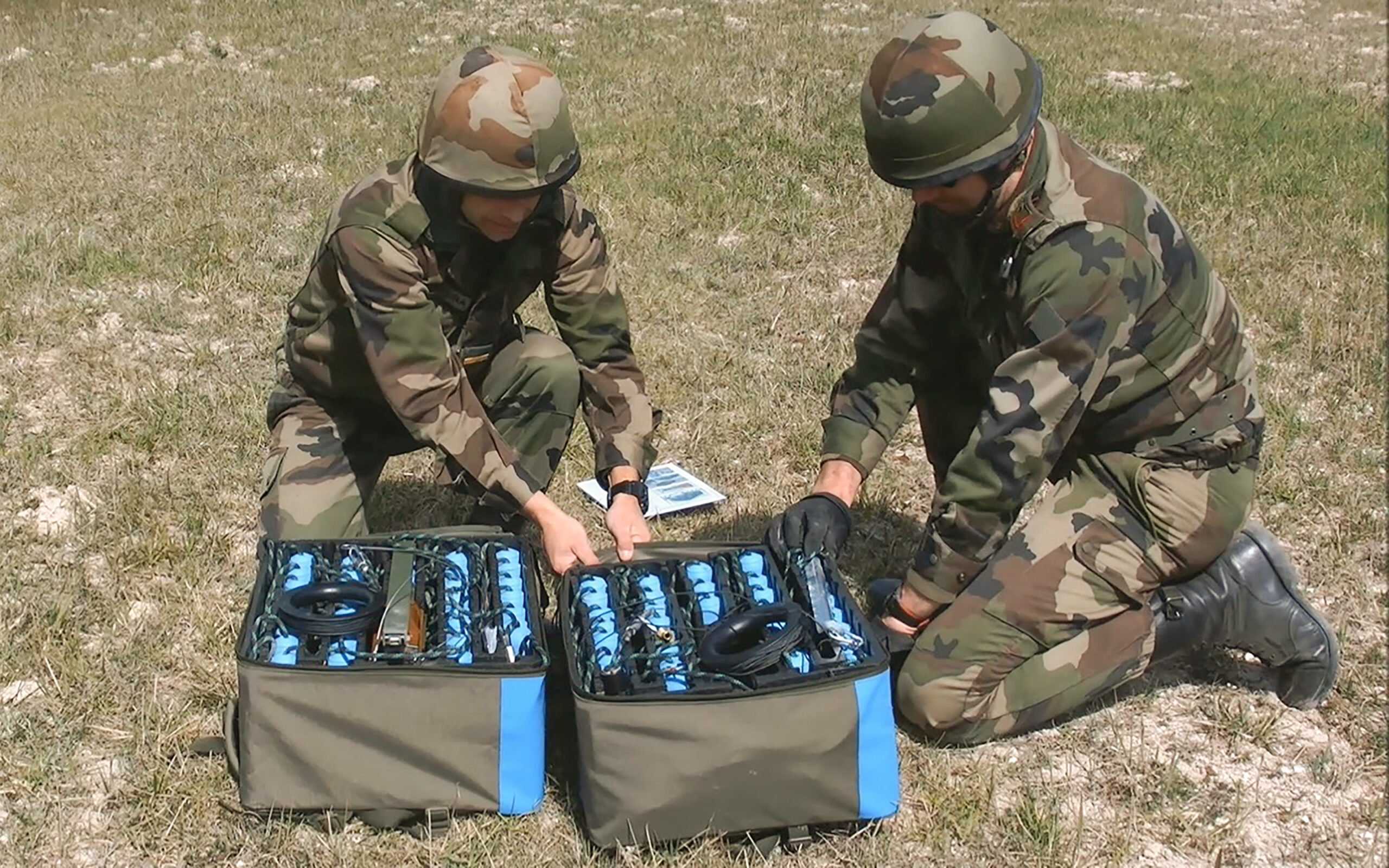
Main image is representative of activities during the DiBAX 2026 exercise, courtesy of LMT