Andrzej Marszewski
Against the backdrop of the current spate of Russian naval drone attacks close to Black Sea NATO members, an announcement on 19 October indicates that Rheinmetall and MSC have won the auction for Romania’s Mangalia shipyard, with a bid of approximately €138 million. The planned purchase, expected to be completed within weeks, links industrial revival to a clearly pressing strategic requirement: sustaining naval forces in an increasingly threatened Black Sea arena.
Mangalia is thus destined to play an important role in the building of two Romanian 96-metre offshore patrol vessels and two 43-metre diver support vessels. According to Bucharest’s defence ministry the two naval contracts come at a combined cost of €920 million, excluding VAT, purchased under the EU’s Security Action for Europe (SAFE) financing instrument. These orders offer an initial workload around which to further develop the shipyard.
The Black Sea connects Ukraine’s export economy with international markets and forms NATO’s southeastern maritime flank. Disrupting its shipping routes weakens Kyiv, whilst imposing significant costs on neighbouring allies. Thus Russian pressure on commerce has strategic effects reaching well beyond mere physical damage to individual vessels: it cuts deep into operator confidence and is aimed at stoking widespread fear.
Protecting shipping thus means sustaining the confidence of crews, operators and insurers. Persistent attacks and threats can deter vessels from using otherwise open routes. Naval presence must therefore support the continued movement of commerce, while enabling rescue and recovery should and when, attacks occur.
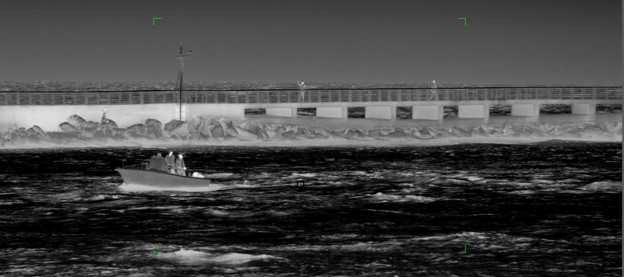
The current proven threat is chiefly unmanned surface craft. A UK statement to the OSCE reported that merchant vessels Alfa Watan and Able were struck by aerial and maritime drones in Bulgaria’s exclusive economic zone on 6 October. Bulgarian officials cautioned against attribution before any investigation. However, Reuters reported a NATO military source attributing attacks on two tankers near Romania’s coast to Russian drones.
In this current threat environment, Romania’s new ships should therefore be assessed against both aerial and surface unmanned threat platforms. Procurement should examine detection and defensive capabilities and systems alongside crew training, with effective links to coastal surveillance and air defence. Rheinmetall’s shipyard announcement lists no specific details of defensive equipment, nor can any counter drone capabilities be inferred from current announcements. Rather, they simply lay the foundation for the next stage of development.
Regional defence cooperation offers obvious deployment space. In July, Romania, Bulgaria and Türkiye expanded their joint Black Sea mine countermeasures task group’s remit to protect critical undersea infrastructure. Diver support vessels could assist inspection and intervention tasks, depending on their eventual equipment. Patrol ships can support maritime monitoring and presence. However, both will require dependable maintenance facilities to remain relevant.
For Bucharest, the depth of any local participation deserves serious oversight. Hull construction creates employment, while responsibility for integrating equipment and undertaking upgrades develops a much needed broader local industrial capability. Access to technical data and dependable spares will influence how much maintenance can actually be performed in Romania. This sustainable long-term availability matters as much as any initial launch date.
The proposed mixed civilian and military workforce could help establish, develop and – critically – retain skilled workers between naval orders. Commercial workloads must prioritise accommodation for military commitments, including any urgent repairs required. As essential critical infrastructure, the shipyard itself will need protection against disruption. Reliable power and port access, together with contingency arrangements for suppliers, will determine whether local capacity remains available and resilient through any crisis.
The next milestones are completion of the purchase, a funded upgrade programme and a clear construction schedule and timeline. What Mangalia’s shipyard deal offers is a test case for rearmament across Central and Eastern Europe. Ultimately, however, any potential contribution to Black Sea security will depend on ships delivered with appropriate defences and a workforce able to keep them at sea.
Andrez Marszewski is Defence Alternatives’ Correspondent-at-Large
Main image shows a view of the Mangalia shipyard, though the piratical figure seen silhouetted remains unidentified! (Leontin l, CC BY-SA 4.0 <https://creativecommons.org/licenses/by-sa/4.0>, via Wikimedia Commons)