Tim Mahon
Some companies punch above their weight. Most often this is due primarily to the personalities of the core personnel, including the founding partners. Frequently it is due in part to a combination of being able to select the right people for the job and having the right technology in the right place at the right time. Sometimes success is partially down to Providence – being lucky enough to hit a confluence of need, will and commitment. Rarely, however, is it down entirely to solo action.
Organisations – particularly small ones – survive and thrive on support and assistance. Especially in the world of defence and security, there is an ecosystem of industrial, governmental and military organisations that work best in lockstep rather than in the ‘us and them’ genre of procurement practice that we seem, fortunately, to have left well behind us. Smarter procurement and a more joined up defence industrial strategy mean that small and medium sized enterprises (SMEs in English, PME in French, Mittelständer in German) contribute more and generate greater economic benefits when proactively supported by government.
Flare Bright Limited is a case in point. Founded on a brilliant idea by a team that recognized the need for flexibility from the outset, the company – which develops software-based capability enhancements for both crewed and uncrewed platforms – has received a number of ‘assists’ from government in the UK and the USA. “We used our own money to develop the prototype and made an application for DASA support in 2018,” founder and CEO Dr Kelvin Hamilton told Defence Alternatives in a recent interview. “That failed, unfortunately, but the feedback we got from DASA was extraordinarily valuable and that led to us entering an MoD competition in which we went from almost a standing start to success in just nine months! That success was transformational – at that time, £200,000 went a very long way”.
With DASA now as a stamp of approval, the company continued to innovate and to pursue its vision of questioning everything, improving everything and committing to the desired outcome. Exploiting incremental advances in its fortunes (“Somebody once said to me getting a cheese sandwich on time is perhaps better than having a 10% chance at a KFC megabucket at some indeterminate future date,” Hamilton offered) Flare Bright went on to win a cash award and institutional support from the Pentagon in mid-2021 and also had a slot on the DASA stand at DSEI that same year. “That gave us both visibility and credibility and marked another turning point for us,” observed Hamilton.
Then came a requirement to demonstrate a GPS-free navigation facility on a much larger drone that the original model had been and a parallel programme with the US Army arose at the same time. That resulted in “very rapid” progress to TRL 6 for a capability that now lies at the heart of Flare Bright’s business model.
According to Hamilton, the total amount of funding to have come from British and American governments approximates £10 million. In a world in which platforms can cost multiples of that sum, that may not sound like a lot, but it can be transformational for a small company feeling its way into the arcane world of defence contracting. “It really has empowered us. We’ve gone from four people to over 30, we are transforming test and evaluation, contributing to greatly improved uncrewed platform performance and even planning for serendipity,” Hamilton observed.
He is sanguine about the future. “We take risks – our technology is pretty niche so we can afford to do so. We are conscious of the need for resilience and we are very aware of the opportunities and vulnerabilities presented by the industrial and commercial markets we operate in. So resilience is one answer, as is the protection of IP – a subject we put a good deal of effort into. Diversity is another key issue – we are already looking at the opportunities for us to contribute meaningfully in adjacent markets, such as space and the mining sector. But the key issue is volume – it’s all about volume and turning that up is only possible if you get support – not just cash, but assistance, understanding, credibility and visibility. That makes the difference for a small, thrusting concern.”
Flare Bright has certainly taken advantage of the support and boost it has received from government on both sides of the Atlantic. Brilliant ideas, smart people, intelligent planning and sheer hard work are all essential components of success stories – but so is support. Having reported on smart acquisition and procurement reform for a couple of decades now, this writer feels vindicated in seeing companies such as Flare Bright benefitting from and taking advantage of the system as it becomes more intelligent, proactive and supportive.
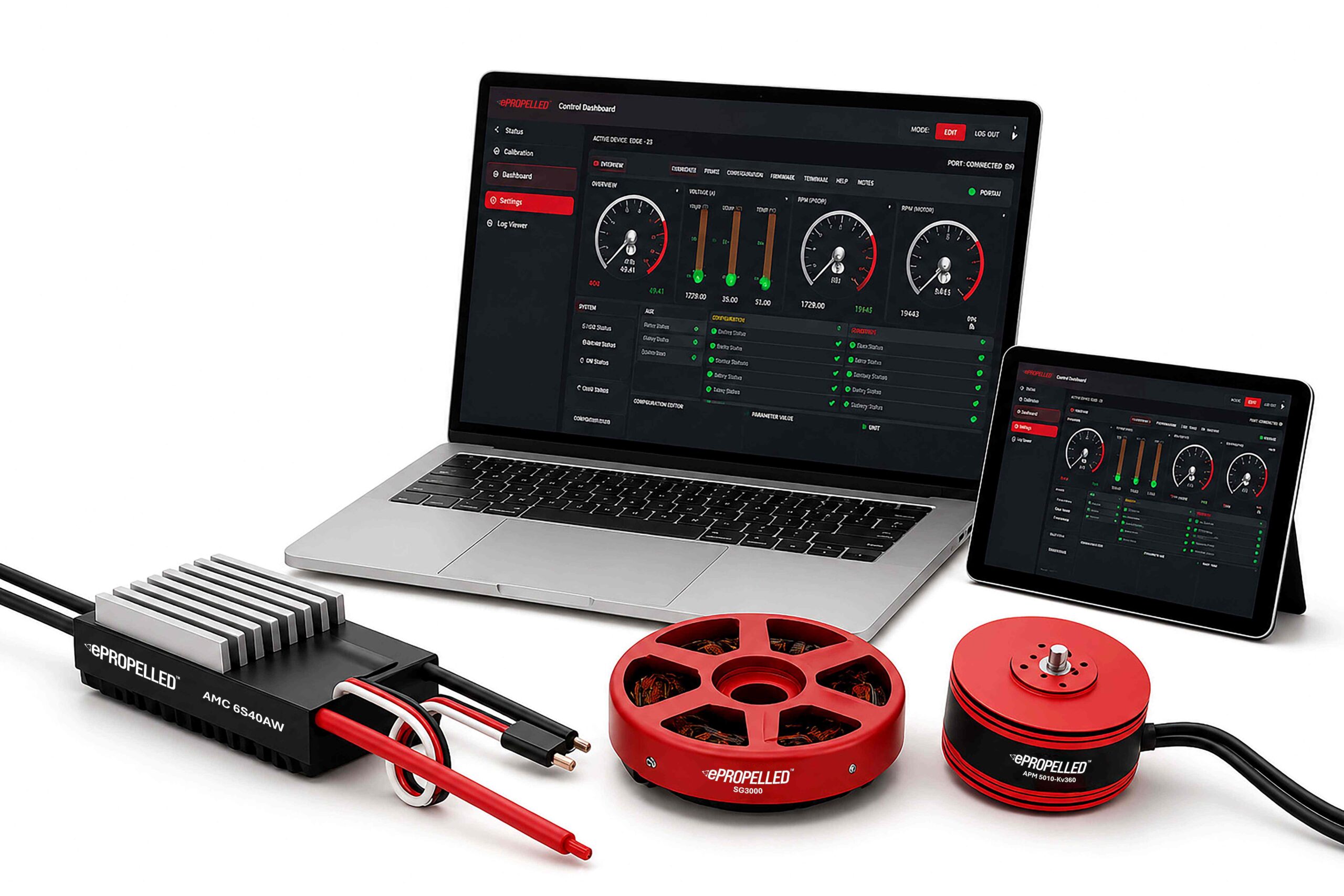
Headline image: From prototype and proof-of-concept to series production – made possible by proactive support from government. (Flare Bright Limited)