Defence Alternatives recently had the opportunity to discuss the defence infrastructure and support business with executives from Amentum, a US-based service-oriented organisation that works quietly but effectively behind the scenes. Here Illy Andrews, Amentum’s VP Defence International and Dr Justin Goldberg, the company’s VP Defence and Security for the UK, respond to questions from DA Publisher, Tim Mahon.
DA: In your backgrounder I saw a statement suggesting you are seeking to increase your UK workforce, currently around 6,000, by 50% in the next several years. That’s pretty robust growth: what is underpinning that and driving you to that growth?
Andrews: We have ambitious plans to add 3,000 new jobs by 2030. Our business in the UK is focused on nuclear energy and the defence sector. Major trends such as global geopolitics and the UK’s defence build-up, the need for greater energy security, the development of AI and the nuclear resurgence are all driving a big increase in demand for our services.
Our growth also boosts the small and medium sized enterprises that work with us on defence contracts. Some have benefited so much that they are no longer SMEs.
DA: You say you’re seeing new opportunities. Are those opportunities principally to grow your core business or do you see some of them pushing or pulling you to develop horizontally as well as vertically?
Andrews: Dynamic changes in the defence market are creating lots of new opportunities for us. For example, we have created the Torus Defence Supply Chain alliance with Accenture, GXO and Maersk.
Torus was formed to deliver four things the MOD has told industry it needs: a supply chain that is resilient enough to absorb shocks without missing a beat: agile enough to reconfigure in real time when conditions change; visible enough to give commanders a single trusted picture of what’s where and what’s coming; and innovative enough to keep pace with a threat environment that never stands still.
To do this, Amentum can draw on decades of experience with the US Department of Defense and the Defense Logistics Agency, who deliver on a scale unmatched by any other military, giving us a deep understanding how to enhance resilience in military supply chains.
DA: Defence in the UK is dancing round publication (finally) of the Defence Investment Plan last week. What is your take? How much of a difference does it make to you?
Goldberg: It helps us at least understand where the funding will go – which projects will be prioritised. That’s great for industry: we understand what’s going to happen, what will accelerate, what will go on the back burner and we can align against that. The publication is positive but the quantum difference lies in the challenge – which we always confront very realistically – of how do we continue to deliver absolute best value for the client? We’re a people business: how do we best leverage the energy, the intellect of our people to find better ways of delivering solutions more cost-effectively. Over the last five years we have already saved our defence clients over £2 billion by looking at alternative solutions. With the DIP we can now see clearly the areas in which that is going to be more and more important – and which are going to be funded. We do a lot around the CASD (Continuous At-Sea Deterrent – Britain’s nuclear defence strategy) and the contingency deterrence environment. We’re positioning to support more around programmes like GCAP and FCAS, ensuring combat readiness and, when you get into the whole arena of uncrewed systems, there is a very strong alignment with our core and where we think our future lies.
DA: How much has this space changed? Does the customer fully appreciate there are things you can do that they can’t? And is there any ‘cookie-cutter’ approach stemming from the parent?
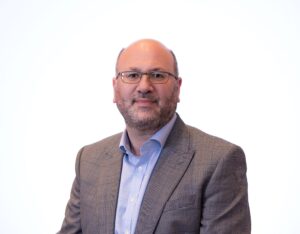
Goldberg: The business has grown up as a UK business and in some cases the things we do here – particularly around some major infrastructure and complex nuclear facility work – is different to what we have done in the US. In fact we are transferring some of that expertise back in the other direction. What is really important to us is we are a UK business – we present a UK face. We have lots of former military personnel working for us and it is really important to them we are looking after UK interests, which we do by understanding UK needs and applying the appropriate expertise – homegrown or from the US – while ensuring it is aligned to UK interests.
For example, we are MoD’s industry mission partner for the hypersonics programme. We facilitated meetings for the client with Amentum colleagues and US partners to share knowledge and look at how that can be exploited here. While we are developing a sovereign capability we are ensuring we are not needlessly reinventing the wheel and can take full advantage of, say, flight vehicles and testing regimes. So we make sure it’s UK-centric, but leverage best practices and knowledge from our partners. And I think that plays well: it resonates.
DA: Is there such a thing as a typical project, given the broad waterfront of disciplines and solutions you cover? Can you sketch one out for us?
Andrews: You’re certainly right that we have a full spectrum of offerings for our clients. How to describe them? Well, they’re complex, they are large and they are technical. So we very much focus on programme management, on perfecting systems integration and on technical and programme integration.
Goldberg: Agreed. There will always be differences between programmes but they all have in common that we work out what the ‘ask’ is and help establish the requirements. We have a great deal of systems engineering capability as well as consultancy capability and that’s about recognising we are both solution and technology agnostic. We can bring the client an honest, objective view of what we think they should be doing and recommend the best solution for them.
We may help the client run and manage the programme, as we do in the Equinox joint venture, in which we are the MoD’s delivery partner. We sit client side and help them run acquisition, acquisition support and through-life support programmes. We help them bring in industry, enabling them to oversee and manage that.
Alternatively, we might be part of delivery. There, we will help run and deliver the programme – if it’s an infrastructure or equipment programme we can support them in development and commissioning, if it’s a technology programme we might help in developing testing and evaluation. In other cases we might provide support at the back end of the programme – operations and maintenance, supporting the client across the full life cycle. Every programme is different, though.
DA: Understood. Referring back to your earlier comment about saving the client £2 billion over five years, can you expand on that a little please?
Goldberg: Sure, let me give you a couple of illustrations. We were part of the RAF Lakenheath bed down programme to support USAF F-35 operations. We were able to leverage knowledge of US and British codes, marry them together and optimise the requirements and design of the corrosion control facility. That reduced the initial cost by several millions. In the programme delivery partner role, for example, we often sit client side and offer a view of options. We helped in developing and negotiating the through-life support programmes for Chinook and Apache, for instance, optimising the ‘ask,’ rationalising the programmes and carving out £200 million in savings.
On submarine programmes, we have looked at programme infrastructure, at how to rationalise new building designs, factor in regulatory and operational changes and optimise every aspect of design and development: lots of examples of that over the years at Barrow and Devonport.
DA: Well that certainly is an ‘Amentum 101 briefing,’ thank you. A fascinating breadth of activity, expertise, capability and obvious commitment. Many more stories to be told, I suspect. In the meantime, thank you for your candour and clarity – I’ll leave you to get on with your role of being the ‘power behind the contract’.
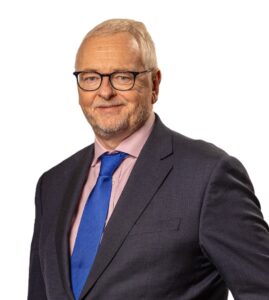
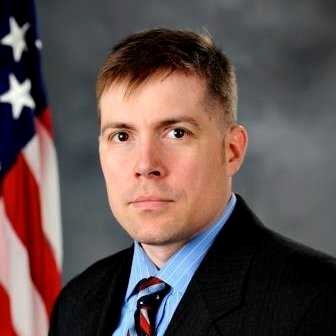
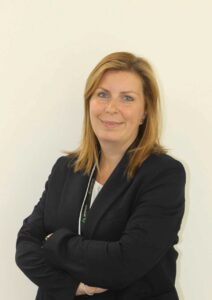
Headline image shows Apache AH6 helicopters in British service. Images embedded in the text show Illy Andrews, VP International and Dr Justin Goldberg, VP Defence & Security UK. (MoD and Amentum respectively).