David Oliver
[Longer than our usual posts, this important contribution from veteran reporter David Oliver charts the tortured history of the FCAS programme and clearly identifies the reasons for its expensive and regrettable failure. Editor]
At ILA Berlin on 26 April 2018 the former German Defence Minister Ursula von der Leyen and her French counterpart Florence Parly signed a document outlining the high-level requirements for joint development of a Franco-German Future Combat Air Systems (FCAS). Three months later, at the 2018 Farnborough International Airshow, the then UK Defence Minister Gavin Williamson unveiled a concept for a next generation jet fighter development as part of the UK’s own FCAS programme entitled Tempest.
Questions were soon being asked as to whether there was the will to commit to development of two rival and expensive European future combat aircraft programmes. Following the launch of Tempest, Airbus’ former CEO Tom Enders was reported as saying “It was time to seriously look at consolidating and coalescing efforts eventually to one. There is just no room for three different programmes, not even for two.” It must be remembered that Dassault was part of the Future European Fighter Aircraft (FEFA) programme which gave birth to the Eurofighter, but withdrew from the project in 1985 to pursue the French ACX demonstrator that became Rafale.
Known in France as Système de Combat Aérien Futur (SCAF), the FCAS would be a complex system-of-systems combining a wide range of elements connected and operating together, including a new generation fighter (NGF) aircraft together with uncrewed remote carriers (RC) while their existing fleets of combat aircraft would still operate beyond 2040. The overall system was to be designed to be interoperable and connected in a larger perimeter with mission aircraft, satellites, NATO systems and land and naval combat systems. Dassault Aviation and Airbus Defence and Space were to join forces to develop the programme, with Safran Aircraft Engines and MTU Aero Engines joining forces to build the NGF powerplants.
In February 2019 the French and German governments awarded the first FCAS contract, a two-year €65 million Joint Concept Study (JCS), to Dassault and Airbus, based on the High Level Common Operational Requirements Document signed in 2018. The JCS identified preferred baseline concepts for the programme’s major pillars such as the new NGF and RC, linked by Combat Cloud and its Ecosystem embedded in a system-of-systems architecture. It would assess operational and technical viability, as well as evaluate programme feasibility of the baseline concepts and identify joint demonstrators and technology needs.
Eric Trappier, Chairman and CEO of Dassault Aviation, said at the time, “This new step is the cornerstone to ensure tomorrow’s European strategic autonomy. We, at Dassault Aviation, will mobilise our competencies as system architect and integrator, to meet the requirements of the partner nations and to keep our continent as a world-class leader in the crucial field of air combat systems.”
Dirk Hoke, then CEO of Airbus Defence and Space, added: “FCAS is one of the most ambitious European defence programmes of the century. With today’s contract signature, we are finally setting this high-technology programme fully in motion. Both companies are committed to providing the best solutions to our nations with regard to the NGF as well as the systems of systems accompanying it. We are truly excited about having been given this opportunity and appreciate the trust placed in both our companies.”
Airbus FCAS programme director Bruno Fichefeux further observed, “Overall, we are experiencing a positive dynamic on FCAS and good progress in the respective work-streams. The French-German co-operation is of paramount importance to kick-start this high-technology and future-oriented project. Furthermore, we appreciate the ambition to onboard Spain as a third FCAS partner nation soon, which we will be an important milestone for the envisioned Europeanisation of FCAS.” Prophetic words!
Although Eric Trappier had not ruled out further expansion of the FCAS consortium, citing Dassault’s experience leading the six-country effort on the nEUROn unmanned combat air vehicle demonstrator, he warned that he would not like it to end up like Eurofighter. “FCAS requires a clear prime in order to control the project.” This was the seed of the programme’s upcoming problems.
In February 2019, Spain’s Minister of Defence confirmed the country’s integration into the FCAS programme, claiming Spain was joining the initiative on equal terms with France and Germany and that the project would give Spain leadership visibility within European security and defence policies. The Spanish manufacturer ITP is a partner in the Eurojet consortium that builds the EJ200 engine for the Eurofighter, as was the company’s parent, Rolls-Royce, which had been selected as propulsion partner for the UK’s FCAS programme. A potential conflict of interest. Nevertheless, in September 2019 the Spanish government appointed Indra to lead its efforts on the FCAS programme with France and Germany.
In February 2020, Phase 1A of the R&D programme was approved by the German Bundestag budget committee, setting up the industrial distribution of the first five sub-programmes to be concluded by early 2022
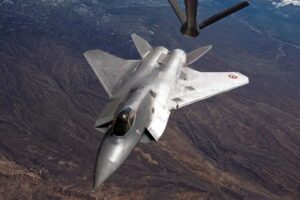
However, there were already other challenges on the horizon in converting the FCAS programmes into an operational reality. Not least were their respective air forces’ differing approaches to the operational deployment of their combat aircraft. France supported numerous NATO-led overseas operations, Germany less so. Also, the French would like NGF to be carrier capable, something the Germans would have no requirement for.
In November 2023 the programme seemed to be boosted by Belgium’s decision to fully integrate into FCAS by mid-2025, ahead of Phase 2 of the programme. Belgium’s participation in the multi-billion-euro project would be “a positive step in the current geopolitical context“, said Jorge San José, Indra’s director of the FCAS project, adding that another country strengthens the collaborative nature of the programme. He added Indra “will work on identifying potential synergies with Belgian industries and see how they can contribute to and support the execution of the programme”.
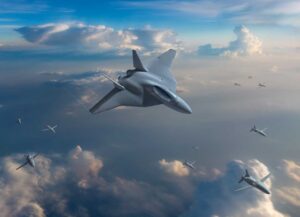
Dassault’s demand for an 80% workshare reignited tensions with Airbus and German stakeholders, many of whom viewed this as a shift toward a de facto national programme. While Dassault continued to defend its technical leadership, German industry questioned whether co-operative frameworks could survive such imbalances, which risked undermining the very multinational trust FCAS was built to foster. While Dassault had no role in the remote carriers pillar, led by Airbus and German industry, it was pursuing a separate French project to field a stealthy unmanned ‘Loyal Wingman’ alongside the Rafale F5 by the early 2030s. This effort was built on the legacy of its nEUROn UCAV demonstrator and reflected France’s national roadmap for autonomous air combat. Meanwhile, the most dynamic innovation was occurring within the FCAS Combat Cloud pillars, where software-first approaches and multinational co-operation were still taking shape.
Germany, meanwhile, was contemplating an NGF without France should industry partner Dassault Aviation continue to insist on a controlling role in the programme. One option reportedly under consideration was to replace the French with new partners – for example, Britain or Sweden. Another option was for Germany and junior partner Spain to move ahead and develop an NGF without France.
Following a sharp rebuke from Dassault Aviation’s CEO, who criticised Belgium’s decision to procure US F-35 jet fighters while investing in the FCAS programme, Brussels was reconsidering its full participation in the programme, although the Belgian defence minister emphasised continued NATO and EU alignment despite the internal dispute.
French President Emmanuel Macron and German Chancellor Friedrich Merz pledged to resolve disputes over the €100 billion+ programme by the end of August 2025, following the escalating disagreements over workshare and programme control. The following month Metz said, “It cannot continue as it is now. I have also spoken with French President Macron several times, and we want to try to reach a solution by the end of the year so that this project can be realised”.
In response, Eric Trappier addressed the French National Assembly deputies, saying, “The Germans can complain, but here we know how to do this. If they want to act on their own, let them do so”. However, the French Ministry of Armed Forces issued a statement saying that it was still committed to reaching a “mutually acceptable solution” with Germany and Spain on the crucial next phase of the programme before the end of 2025.
At the same time, in what appeared to be an encouraging move, Spain approved a €350 million loan to Indra for its continuing participation in the FCAS programme and New Generation Weapons System (NGWS) development, while confirming that defence ministers from the three nations would meet in October 2025 to refine priorities.
Only weeks later, Airbus’s French CEO Guillaume Faury responded to Dassault’s continuing complaints about its share of participation in the programme saying, “Our partner has been very open when they’re not happy with the work share that was agreed and they’re asking for something different, which is not what we agreed. If they’re not happy with what was decided and they don’t agree to continue in this setup, they are free to decide to move out of FCAS”.
A ministerial meeting was tentatively set for the week of 24 November to discuss the next phase, which included a flying demonstrator and armed drone packs, amid continuing disagreements over leadership and industrial roles. Germany, France and Spain planned to meet on 11 December to resolve their disputes over the project. Meanwhile, Airbus was said to be partnering with Saab on a loyal wingman, whereas Italy said Germany would be looking at joining the rival trilateral Global Combat Air Programme (GCAP). Options now under discussion included fully terminating the programme or significantly scaling it down.
Again, another nail was hammered into the FCAS coffin on 8 December when IG Metall vice chairman Jugen Kerner and the head of the general works council of Airbus Defence & Space, Thomas Pretzi, wrote a joint letter to German Defence Minister Boris Pistorius and Finance Minister Lars Klingbell saying, “We like to work with French companies, but not with Dassault”.
The three FCAS partners revealed little to nothing after the December meeting of their respective defence ministers in the German capital, which it was hoped would begin to break the impasse over their collaboration, making the programme “very unlikely” to proceed as planned, according to sources.
On 31 December, Saab CEO Micael Johansson stated readiness to co-develop a new fighter jet with Airbus if the FCAS programme collapsed, stressing the need for political commitment and industrial independence. Saab and Airbus’s collaboration on combat drone development was potentially a precursor to broader co-operation. Saab was also conducting national studies under Sweden’s KFS next-generation fighter programme that focuses on a stealth-capable aircraft and loyal wingman drones.
Discussions with France were still ongoing about whether FCAS would result in a single aircraft or be split into two, Chancellor Merz said on 20 January 2026. On 6 February, BDLI and IG Metall endorsed a two-aircraft FCAS solution, aiming to resolve planning uncertainties and industrial friction. They argued that this was the best solution to ensure national priorities were fulfilled while strengthening Germany’s aerospace sector through clearer roles and domestic value creation. Guillaume Faury said Airbus would also support a two-fighter approach for FCAS if mandated, arguing it is too early for an all-uncrewed system and that a manned fighter is still needed, potentially evolving to uncrewed later. He said; “This isn’t a political quarrel. We have a real problem in the requirement profile and if we can’t solve that, then we can’t maintain the project”.
Ironically, on 16 February Safran’s CEO Olivier Andries described co-operation between German engine manufacturer MTU and his French company developing a new engine for FCAS, as, “going smoothly”. On 4 March, Trappier said at a press conference; “If Airbus maintains its position of not wanting to work with Dassault, then FCAS is dead”.
As late as 16 March, Indra’s executive chairman Angel Escribano said the programme was too important for Europe. “I believe that the programme will go ahead”, he said.
Franco-German mediators on the FCAS programme were granted a 10-day extension to 28 April 2026 to resolve disputes between Dassault and Airbus, but Andrius Kubillas, Europe commissioner for defence, cited FCAS as just another example of a failed European programme.
This was exactly the final conclusion drawn by most stakeholders involved in the programme, after nearly a decade of protracted discussions and bitter fights over industrial IP, military requirements, programme management and economic fall-out. On 5 June, a German government source said: “The misery is finally over.”
In the aftermath, Leonardo CEO Lorenzo Mariani said Italy was open to Germany joining GCAP and Italian Defence Minister Guido Crosetto added that more partners could reduce costs, However, Japan remained reluctant over anything that might delay the programme before the planned 2035 service entry date.
India had previously considered participating in one of two European sixth-generation fighter programmes and, as France has now begun to consider the involvement of new partners, India could be one of them. Éric Trappier said in July that he supported expanding international co-operation on the development of a sixth-generation fighter, including participation by non-European countries.
At Farnborough, Airbus Defence and Space CEO Guillaume Faury told Defence Alternatives that; “we tried to make it work with Dassault but we were not happy with the result, but now we have to forward, we have to write a new page”. Asked if Airbus would consider joining the GCAP programme, he would only say that is to be determined. He said that the FCAS programme was no longer valid as designed but its other pillars, combat cloud, remote carrier, and engine development, were progressing despite the programme being cancelled. Under the new Team Gen 6 industrial partnership, Airbus plans to continue work on the German and Spanish components of the FCAS programme.
Failure of the FCAS programme has serious lessons for the GCAP partners, the most serious of which is that responsibilities of each of them has to be clearly defined and maintained, as have their financial investment into the programme. Their defence ministers and air force commanders must get their acts together as soon as possible to red line their service requirements, while the governments of the partner nations are bound to change in the next decade, which could also change their outlooks on defence and how it will be paid for. As they say, it’s not over until it’s over.
DA Comment
This analysis charts the genesis and evolution of the arguments that killed a promising project. They also reveal the fundamental truth underlying the entire future of collaborative R&D, procurement and deployment of defence-related hardware and software. With a spirit of compromise at the forefront of the minds of government, military and industrial negotiators, a solid, dependable and effective solution to harmonized requirements can be found. Without it, any (and perhaps all) such projects will be doomed to rancorous, divisive and expensive failure. Europe can no longer afford to allow such behavior to prevail. It is way past time for a paradigm shift.
David Oliver is a veteran aerospace writer, reporter, editor and photographer and a regular contributor to Defence Alternatives.
Headline image shows a mockup of the Franco-German FCAS New Generation Fighter displayed at the 2019 Paris Air Show (David Oliver). Images in text body show Airbus Defence and Space’s FCAS concept of the new generation fighter (NGF) operating with a swarm of remote carriers, (Airbus) and Dassault Aviation’s concept of a French carrier-capable NGF aircraft, which Germany did not want. (Dassault)