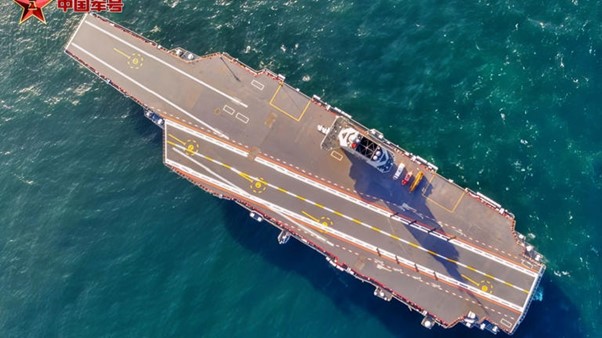
The scale, pace and innovation of China’s defence industry can sometimes be both awe-inspiring and intimidating. From aircraft carriers to huge drone motherships, new artefacts appear at the end of production lines to a drumbeat most other countries fail to achieve. The world’s second largest population, state ownership and control of most of the pertinent organisations and a history of forward planning that goes back decades have their impact.
There are subtle signs, however, that not everything Beijing touches necessarily turns to gold. The H-20 so-called ‘stealth bomber,’ trumpeted for almost a decade as an answer to the American B-21 Raider, remains elusive despite regular assurances from official Chinese sources that it will appear ‘soon.’ “The H-20 is almost here,” runs an oft-repeated mantra in the state-run media.
As a counterweight to this, the US Department of War has openly stated its belief that the H-20 will not appear in Chinese service till the early 2030s – to which the Chinese again responded “soon.” Close observers of the Chinese defence industries believe the delays in formally unveiling the aircraft hint at possibly intractable problems with engines, stealth coatings and manufacturing processes. There are also indications, they state, that confidence in achieving the claimed range and level of stealth is faltering.
The bottom line is that, given traditional Chinese behaviour, if the aircraft was ready to enter service, the authorities would be making a very big fuss about it. Military aircraft rank high on the hierarchy of prestige government assets and are surrounded by propaganda almost as soon as they are made public – witness the J-20 Mighty Dragon, of which up to 500 examples are thought to have been built to date. By contrast, very little verifiable data about the H-20 has been released. Frequently teased, but yet to be delivered, the H-20 is claimed to have a combat radius approaching 6,000 miles, meaning it could easily strike US forces in Japan, South Korea and on Guam. With aerial refuelling capability, the stealthy ‘flying wing’ design aircraft could strike targets in North America. With a 10t payload that is a not insignificant threat.
Reports in the specialist press to date have focused on the platform’s physical characteristics and on debating whether its format truly deserves the ‘flying wing’ definition. Nobody is being drawn on the issue of when it might be expected to enter PLAAF service in operationally relevant numbers. Even official DoW statements are limited to defining China’s power projection ambitions without giving any evidentially-supported estimates for an initial operating capability.
Grainy footage of what is purported to be the H-20 in flight has circulated on the Chinese internet and bland, non-specific statements from official and semi-official sources abound. Chinese sources are undoubtedly all too clear about the ‘ghost-like’ capabilities of the B-21 and are likely keeping their powder dry until the radar cross-section, low observability and ‘stealth coating’ characteristics of the H-20 at least match those of its American counterpart. Chinese scientist and engineers sincerely believe it is only a matter of time before they achieve this, and a senior PLAAF general recently stated there were no bottlenecks delaying the programme – despite the fact there is apparently no dedicated production line for the type as yet. The $64,000 question, though, is – how many will be built, and how soon is “soon”?
Headline image: An early picture of the H-20 from Chinese social media via Creative Commons.