The war in Ukraine has taught military planners many lessons: one of the most important is the speed of secure communications between front line forces and operational headquarters. Ukraine is also looking at how to share priceless battlefield data with allies, the country’s deputy prime minister said, calling the vast trove of stored information one of Kyiv’s “cards” to strengthen its position as it negotiates support from friendly countries. It is also very careful about how it shares it.
The UK’s 2025 Strategic Defence Review (SDR) revealed that digital, Artificial Intelligence (AI), and data skills, of which there is a persistent shortage, constitute an opportunity to lead in NATO if the MoD gets it right – treating data as a strategic asset, with protected computing and data infrastructure and assured data flows from allies and the British intelligence community. Appointing a data/AI lead within each procurement capability portfolio would ensure that data and AI are considered through the full lifecycle of new capabilities.
The answer to both Ukraine’s and the UK MoD’s quest for fast, reliable and secure data transfer is already being addressed by British technology company Bridgeworks. According to Chairman Jamie Eykyn, a former Grenadier Guard, “As far as Bridgeworks is concerned, one of the top applications of our technology has to be in the defence arena.”
The company has examined the problem of data movement and come at it from an entirely new perspective. In mastering the rules of data movement over distance, Bridgeworks has now broken them, in order to provide the ability to move significant volumes of critical data in real time and removing unacceptable time lags that risk delay or failure.
CEO David Trossell, who joined Bridgeworks in 2000, is a recognised visionary in the storage technology industry and has been a key influencer in developing its intellectual property and leading technology edge. “Having the ability to rapidly send, receive, analyse, process and use data insight in a military operation can make the difference between success and failure – winning or losing a battle. Former UK Prime Minister Boris Johnson – according to the UK’s MoD – once said ‘The victors of the future will be those who are able to master data and new technology.’”
The MoD’s vision is for defence data to remain “an enduring strategic asset, effectively exploited and driving sustainable battlespace advantage and business efficiency” adding that “data has always contributed to success in defence – it’s fast becoming our lifeblood. Every decision we make is increasingly data-driven; from multi-billion pound investment and divestment choices, to life-or-death situations handled in a split second on the battlefield, to defending against the increasing volume of cyber threats.”
Bridgeworks’ industry-defining Data Acceleration technology is re-inventing Wide Area Networks (WAN), enabling organisations to reach transfer speeds up to 200x faster, whether large volumes, encrypted or media files. Using AI technology, Bridgeworks dramatically alleviates the effects of latency and packet loss, meaning that data can get to where it needs to be faster, maximising business performance with dramatic return on investment. Bridgeworks has been using AI for over a decade.
The constraint is no longer the size of the pipe, as 1Gb, 10Gb and multiple 10Gb pipes are becoming the norm. The challenge now is ensuring the full extent of the bandwidth available is used and capitalising on the capability it brings. Multiple packages of information can be stacked and sent sequentially, akin to bullets fired from an automatic rifle’s magazine.
All this is achieved without touching any customer data, thereby maintaining security protocols, governance and compliance. Removing unacceptable time lags that risk failure, delay or incur major costs, boosts an organisation’s environment and makes the most of its IT investment. Fast backups with WAN Acceleration can also ensure the data does not fall into the wrong hands while in transit and assures very rapid data restoration, including encrypted data.
WAN Acceleration uses AI, machine learning and data parallelisation to mitigate the effects of latency, improving bandwidth use by 98% and providing everything required to protect increasingly large volumes of highly sensitive data.
The 2025 SDR recognised that much of the best innovation is found in the private sector, while the increasing prevalence of dual-use technologies has widened the net of potential suppliers potentially contributing to UK defence outcomes. It recommends the MoD must embrace its role in seeding innovation and growth, rapidly adopting new technology to keep the Integrated Force at the forefront of warfare. In particular, it should build relationships with the investors behind the innovators, one of which should be Bridgeworks.
© David Oliver 2026
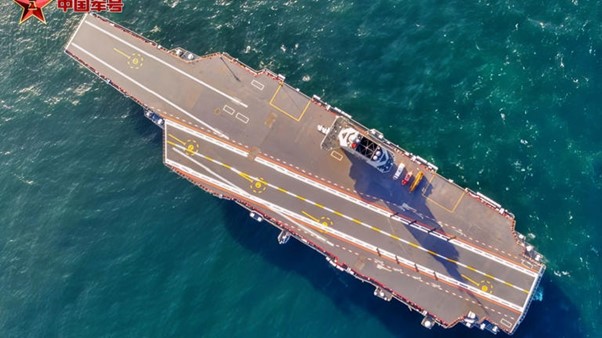
Headline image: Ukraine is looking at how to share priceless battlefield data with its allies. (Ukraine MoD)