Continuing the theme of potential conflict in space (see Time to foil the bully in this column, 6 February), NATO member states appear to be developing concerns – quite rapidly, in some cases – over both Russian and Chinese alleged plans for spaceborne weapon systems that could become operational in short order. Given the visible efficacy of the SpaceX Starlink constellation in providing communications, command and control and targeting facilities to Ukraine’s armed forces in its current conflict with Russia, the press has unsurprisingly dubbed the potential weapons “Starlink-killers”.
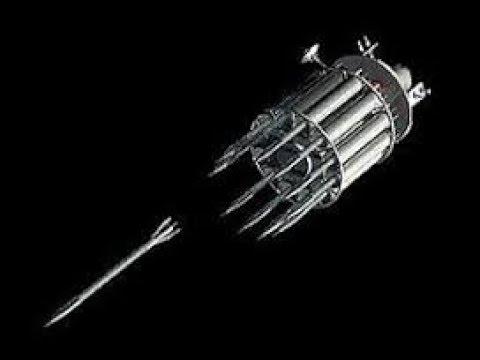
In Russi’s case the efforts seem to be directed towards perfecting a so-called ‘zone effects’ anti-satellite weapon. This would release a cloud of high density but very small pellets – some claims indicate they could number in the thousands at a time – to intersect the orbits of targeted satellites. Small, fast-moving and intensely difficult to detect, track and counter, the weapon would essentially produce spaceborne shrapnel, with potentially catastrophic consequences for satellite constellations. As of December 2025 SpaceX had over 9,300 Starlink satellites in orbit: the eventual total number for the mega-constellation the company aspires to tops 42,000.
With those numbers in mind, the Russian approach to countering Starlink makes sense, in that a zone effect weapon has the potential to destroy multiple satellites at one time. That mass effect, however, is the very reason observers are becoming concerned. The indiscriminate, unguided nature of the weapon puts all other satellites at risk – whether their purposes are defence, earth observation, telecommunications broadcast and relay, global navigation systems (such as Russia’s own GLONASS) or weather monitoring. More worrying to some, however, is Moscow’s oft-repeated mantra that spaceborne assets providing aid and succour to Ukrainian defensive efforts are “legitimate targets”. This fuels suspicions that an attack may come sooner rather than later. After all, Russia has already destroyed at least one of its own satellites in testing anti-satellite technologies – and event that led to a cloud of at least 15,000 articles of trackable space debris that will continue to orbit for years.
Beijing’s approach to the challenge posed by the capabilities and perceived threat posed by Starlink is somewhat different. Here, all the available evidence (including significant research published in peer-reviewed international academic journals in recent years) points to the development of high-power microwave (HPM) weapons. Theoretically, an HPM weapon could destroy a satellite instantly, creating minimal debris or collateral damage and thereby providing the operator with both tactical and strategic advantage. Ironically, their method of working – storing electrical energy and releasing it in a single powerful pulse – is similar to the Tesla coil at the centre of one of the other enterprises run by Elon Musk, the developer of Starlink.
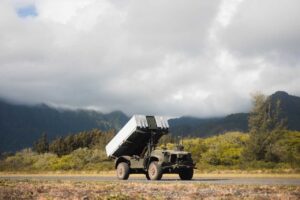
The problem to date has been the required size and mass of an appropriate HPM device has been too big to be tactically relevant. Now, published studies reveal he existence of a device designated TPG1000CS, just 4m in length and weighing in at 5t. This makes it ‘small’ enough to be mounted on a ground-based vehicle, an aircraft or even on a satellite, according to analysts. Testing has revealed a capability for multiple pulses ranging in output from 1GW to over 20GW with consistent performance. Technical experts suggest a 1GW pulse from a ground-based HPM would be sufficient to severely (probably fatally) disrupt the targeted satellite.
Like Russia, China is on record stating there is an imperative to find a method of negating the “Starlink threat”. In 2025 the Beijing Institute of Technology ran a simulation demonstrating how to disrupt the Starlink capability over an area which was (coincidentally – not) the approximate size of Taiwan.
Is this science fiction? NATO – and other normally staid analysts – believe not. Given Moscow’s increasing frustration with Ukrainian foils to its aggressive forays, the possibility the Kremlin might succumb and attempt to disrupt Starlink in an all-out “damn the consequences” attack is looking more and more possible. From Beijing’s perspective, might the current focus of European interest on the conflict in Ukraine provide enough distraction for an attempt on Taiwan – with a likely precursor of a disruptive effort in orbit?
However likely either of those two scenarios is, the level of possibility has risen considerably over the last four years. And the level of uncertainty in the minds of those responsible for planning responses has also risen – some would say exponentially. Which is, perhaps, the greater danger.
Tim Mahon 7 February 2026
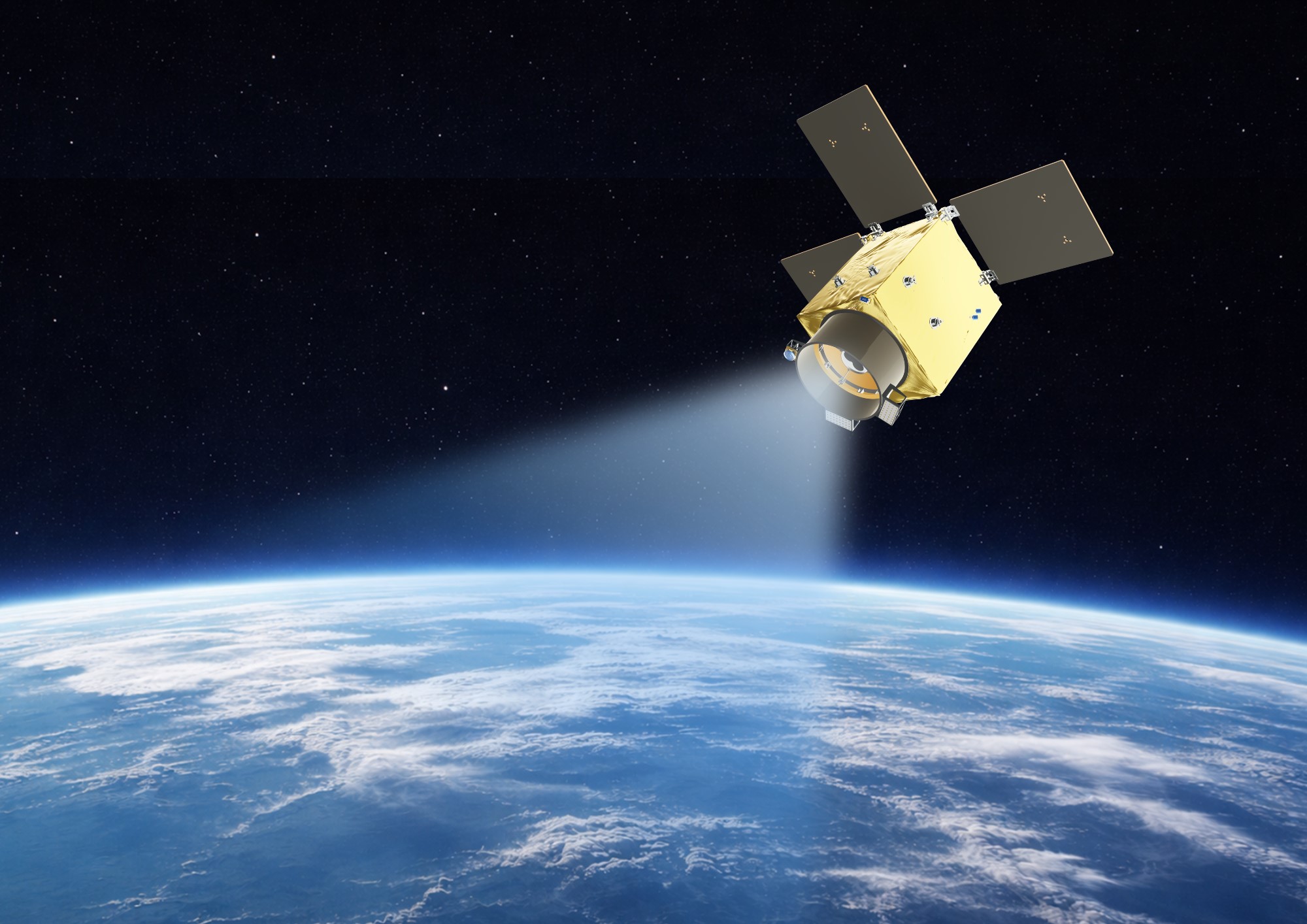
Headline image: Starlink satellites awaiting release into orbit. The ultimate aim is to see 42,000 of these spacecraft – now weighing in at 800kg each – in orbit. (SpaceX)