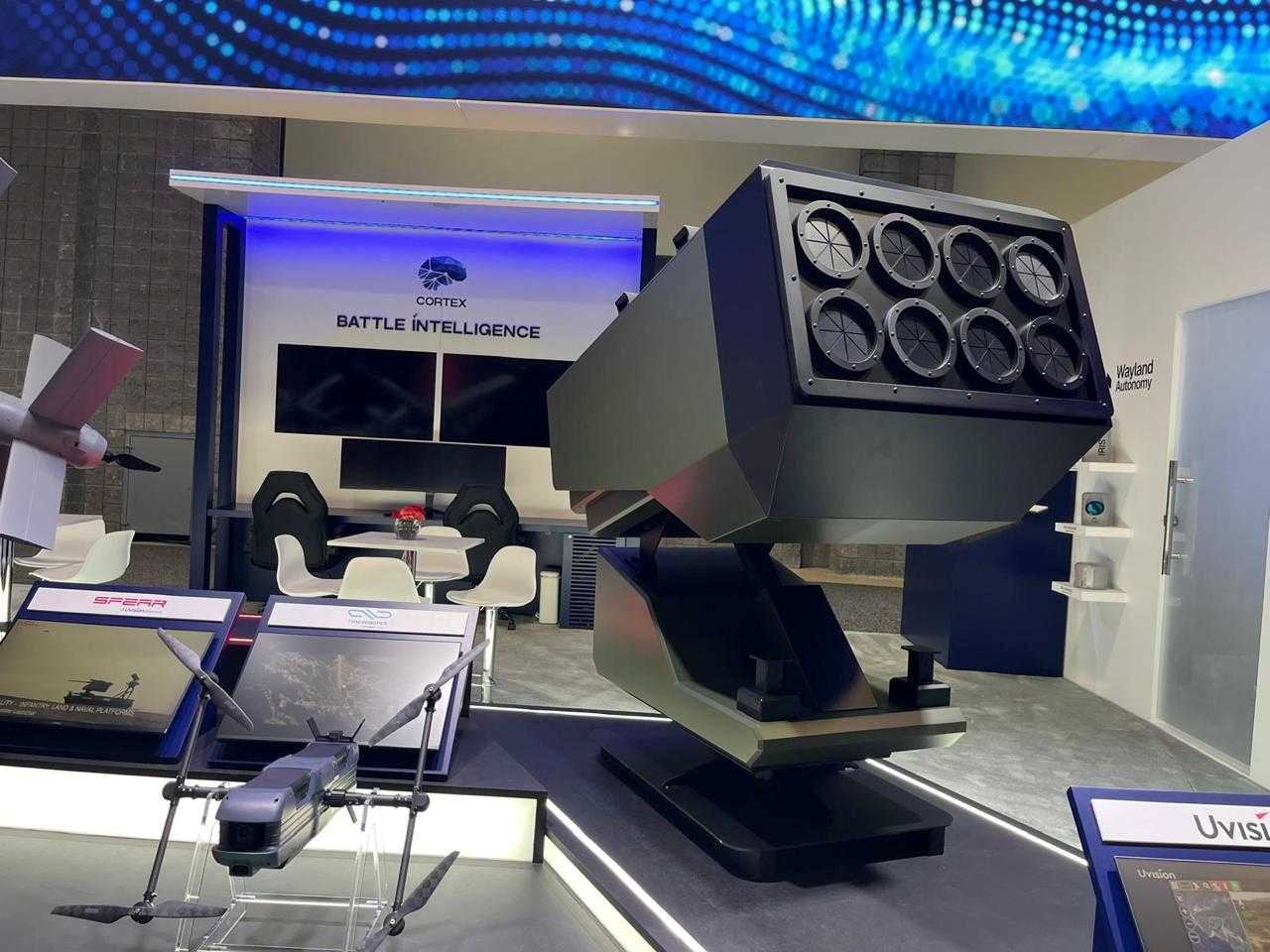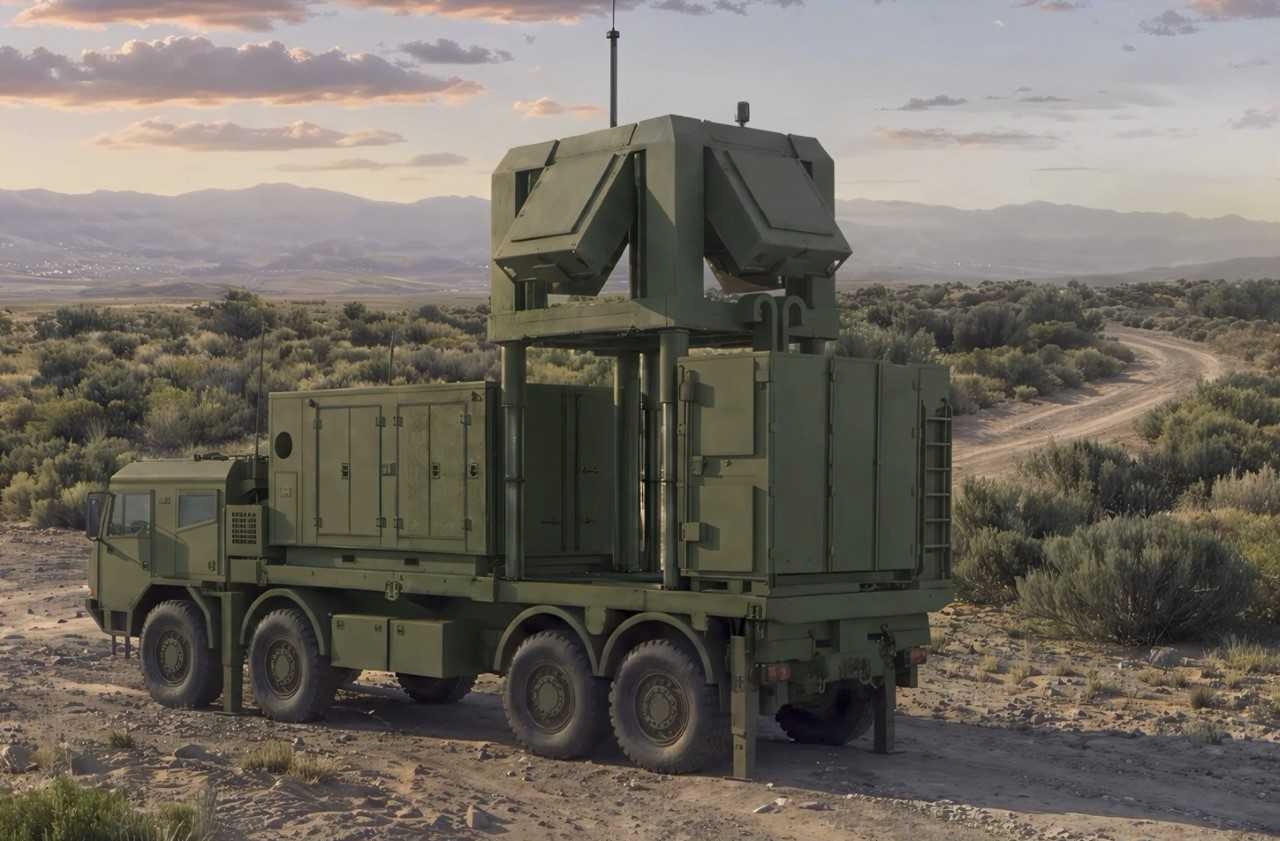
Bearing a name inspired by the mythical half-man half-horse Centaur, the electrically-powered CENTAUROS anti-drone system from Greek state-owned Hellenic Aircraft Industries relies on EW effectors to disrupt drones, singly or in swarms.
With a claimed detection range between 25 and 40km (and passive detection at up to 150km), each CENTAUROS unit is priced in the €2 million range, making it an extremely cost-effective alternative to traditional air defence systems. Already installed on at least four Hellenic Navy MEKO-class frigates, with a fifth essentially ‘plug-and-play’ installation said to be imminent, the system has already undergone a baptism of fire in July 2024, when the frigate Psara, participating in the EU’s Operation Aspides mission in the Gulf of Aden, downed two of four drones and forced the Houthi operator(s) of the others to reverse course. The two ‘kills’ were equally shared between the CENTAUROS system and the vessel’s 127mm gun.
Development continues, to ensure the system keeps pace with the rapid development of drone capability. Having been originally designed with the ability to defeat Turkish Bayraktar drones in mind, the system has reportedly generated export interest from Cyprus and Armenia – both of whom consider part of their threat envelope to consist of Bayraktar drones – and an unspecified number of Gulf states. The system has been designed to be integrated onto a variety of ground and maritime platforms as well as fixed infrastructure sites.
DA Comment
The CENTAUROS development should be seen as part of the Greek commitment to invest €800 million in defence innovation as a component of the government’s €30 billion military modernization programme that is scheduled to run through 2036. It appears to be part of a broader EW capabilities development initiative that includes the Hyperion (to counter Class I UAS) and Telemachus systems.
This is an important development for Greek capability and the defence industrial base. Perhaps even more importantly, it telegraphs strategic intent. Some pundits in Athens are promoting much wider deployment, including installation on smaller, faster attack vessels. With tensions increasing vis-à-vis potential adversarial approaches to future resource extraction in the Eastern Mediterranean, this would appear to be a sensible precautionary move – as well as one that could save potentially vast sums in terms of significant consumption of expensive munitions in any future conflict.
Headline image: One of the first official images of the CENTAUROS naval installation. (via HAI)